
Loading...
Serving Tracy, CA and surrounding areas. (209) 699-5362
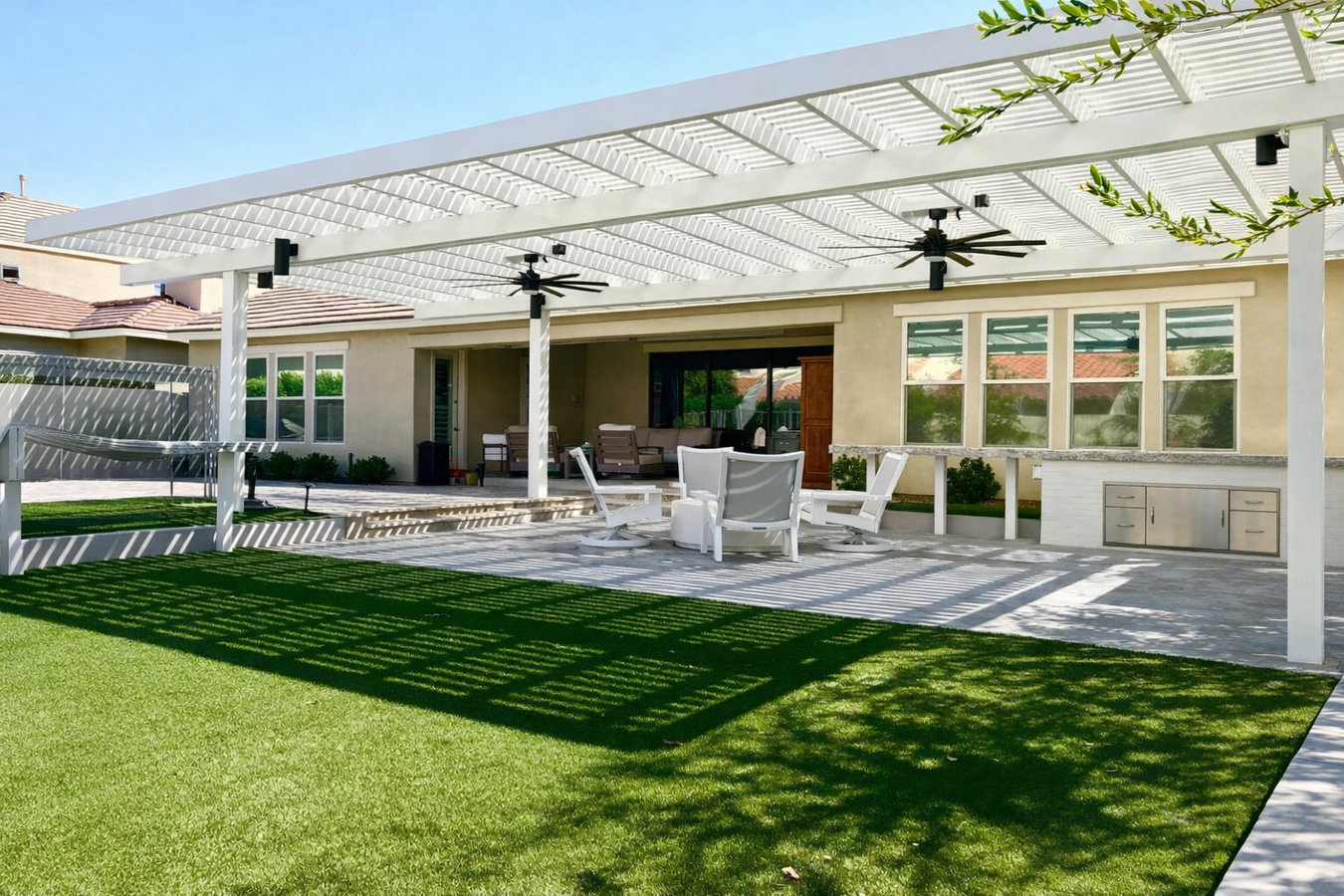
Tracy summers push past 100 degrees and your patio should still be usable - we install solid-roof, lattice, and louvered covers with proper permits, clay-soil footings, and ledger connections built to handle the Delta breeze.
Patio cover installation in Tracy means attaching a permanent roof-like structure to the back of your home that shades your outdoor space - most installations take one to three days on-site, with a total project timeline of four to seven weeks from first call to finished cover once city permits and any HOA approvals are factored in.
A patio cover is a practical investment here because Tracy's climate makes an uncovered backyard essentially unusable for three or four months a year. The right cover - properly sized, correctly anchored to the house wall, and with post footings that account for the area's clay soil - turns your backyard into a space you can actually use from morning to evening. If you eventually want to take the next step from a cover to a fully enclosed room, we can discuss patio enclosures at the estimate stage so you understand how the two projects relate and what it would cost to go further down the road.
The City of Tracy requires a building permit for any patio cover attached to your home. That process adds a couple of weeks to the timeline, but it also means a city inspector verifies that the structure was built correctly - protecting you during the project and whenever you sell or refinance.
If you walk outside between June and September and immediately turn around because the heat is unbearable, your patio is not working for you. In Tracy, where triple-digit temperatures are a regular summer feature, an uncovered patio feels like standing in an oven. If you have stopped using your outdoor space during the months you most want to be outside, a patio cover would change that starting the day it goes up.
Tracy's intense summer sun is hard on outdoor furniture, cushions, and even the concrete surface of the patio itself. If you are replacing cushions every year or noticing your furniture aging faster than it should, direct sun exposure is the culprit. A patio cover would protect your investment and extend the life of everything sitting beneath it.
If you already have a patio cover but notice it leaning, see rust streaks running down the posts, or spot a gap opening up between the cover and the wall of your house, the structure is failing. These are not cosmetic issues - a cover separating from the house can come down in a strong Delta breeze windstorm. This is a sign you need a replacement, not a patch.
Tracy's evening Delta breeze is a welcome relief from the heat, but it can make an open patio too gusty for comfortable dining or relaxing. A solid-roof patio cover creates a sheltered zone that breaks the wind enough to make evening use much more pleasant. If you have noticed yourself heading inside when the breeze picks up, a cover with the right design can solve that.
We install solid-roof, lattice, and louvered patio covers as attached structures built to City of Tracy permit standards. Every installation includes proper ledger attachment to your home wall, post footings poured to the depth Tracy's clay soil requires, and final city inspection as standard parts of the job. The material choice - aluminum versus wood, solid roof versus lattice - depends on your priorities around maintenance, budget, and appearance, and we walk you through the trade-offs honestly at the estimate visit. If you want to add a ceiling fan, recessed lighting, or an outdoor heater, we discuss that upfront because it affects the permit scope and structural design. For homeowners thinking about a fully enclosed space rather than an open cover, we compare the patio cover against our sunroom design process so you can see both options side by side.
Many Tracy homeowners also ask about patio enclosures when they realize that a cover is a good start but full weatherproofing is what they really want. We are straightforward about which option fits your goals and your budget better.
Suits homeowners whose main goal is blocking direct sun and keeping light rain off the patio, with minimal ongoing maintenance.
Suits homeowners who want a warmer, more custom look and are willing to paint or stain the structure periodically to maintain it.
Suits homeowners who want filtered light and a more open feel, and whose primary concern is aesthetics rather than full sun blocking.
Suits homeowners who want ceiling fans, recessed lighting, or an outdoor heater built into the cover at the time of installation.
Tracy sits in the San Joaquin Valley, where summer temperatures regularly climb above 100 degrees and heat waves can push past 110. An unshaded patio in Tracy is essentially unusable from late June through September - which means a patio cover is not a luxury upgrade, it is the difference between having functional outdoor living space and not. On top of the summer heat, Tracy's evenings bring the Delta breeze - a wind pattern from the Sacramento-San Joaquin Delta that gusts enough to put real stress on a patio cover that is not properly anchored. This is why the connection point where the cover meets your house wall matters more here than in calmer climates. Homeowners in Stockton and Ripon face similar conditions, and the same installation quality standards apply across this part of the valley.
Tracy has also grown rapidly since the 1990s, and many of its neighborhoods - including subdivisions near Glenbriar, Almondtree, and the Mountain House border - are governed by homeowners associations with rules about patio cover materials, colors, and setbacks. Knowing the local HOA landscape matters as much as knowing the local permit process, and both affect your timeline before any crew sets foot in your backyard. The clay-heavy soil throughout this part of the valley is another local factor: post footings that are not poured deep enough or with the right concrete mix will shift as the ground expands and contracts with the seasons, which leads to a cover that wobbles and eventually loosens from the house wall.
Tell us the size of your patio, the style you have in mind, and whether you have an HOA. A good first conversation covers your goals, your timeline, and whether you want electrical - all of which affect the quote we bring to your home.
We visit your home to measure the patio, look at the wall where the cover will attach, and assess where posts will be set in the ground. You receive a written quote that breaks down every cost - materials, labor, permit fees, and any electrical included.
We submit the City of Tracy permit application and any HOA architectural review documents as standard parts of the job. Both processes run in parallel to avoid stacking delays. Tracy permits typically take two to four weeks - we handle the paperwork and keep you updated.
Most covers take one to three days on-site. Post footings go in first, then the frame and roof panels, then the ledger connection to your house wall. The city inspector signs off when the work is done, and we walk you through the finished structure and hand over all permit records.
We reply within one business day - no obligation, no pressure. Tell us your patio size and HOA situation and we will come out with a written quote.
(209) 699-5362Tracy's expansive clay soil shifts with the seasons - swelling in wet winters and shrinking in dry summers. We pour post footings to the depth and with the concrete mix that handles that movement, so your cover stays level and anchored rather than shifting over a few years.
The point where the cover meets your house wall is the most critical part of the installation. Tracy's Delta breeze gusts on summer evenings and tests that connection regularly. We locate wall studs precisely and use proper anchoring hardware so the structure stays tight to the house under real wind loads.
International Association of Certified Home InspectorsWe handle the City of Tracy permit application and prepare HOA documents for neighborhoods in Glenbriar, Almondtree, and other Tracy subdivisions as a standard part of every project. A contractor who skips this step is leaving you exposed - legally and when it comes time to sell.
City of Tracy Community DevelopmentYour estimate covers materials, labor, permit fees, post footings, and any electrical - with no vague line items. If something unexpected comes up during the project, you hear about it before we proceed. The final invoice matches what you agreed to at the start.
A patio cover is a straightforward project, but done wrong it becomes an expensive one to fix. We bring local knowledge about Tracy's soil, its permit office, and its HOA neighborhoods to every job - so the finished cover stays solid, stays attached to your house, and passes inspection the first time.
Full design planning for a covered or enclosed outdoor addition - useful when you want to think through the look and layout before committing to a specific structure.
Learn MoreA step up from a cover - adds walls and windows to your covered patio for full weather protection and usable living space year-round.
Learn MoreInstallation slots fill up before the heat peaks every spring. Call or send a message today and we will get your patio cover scheduled before the busiest part of the season.